Kenya Safari Planning: The Ultimate 2026 Pre-Departure Checklist
What if the success of your African journey depends less on your binoculars and more on a digital portal? It’s a question many travelers face as they begin their Kenya safari planning for 2026. You likely feel the pull of the Great Migration or the quiet majesty of Amboseli, yet the logistics of e-Visas and shifting park fees can feel like a dense thicket. It’s natural to feel a bit overwhelmed by the technical side of adventure. We believe that preparation should be as intentional as the journey itself, acting as a bridge between your home and the untamed wild.
This guide provides a comprehensive, expert-led roadmap to ensure your Kenyan adventure is seamless and safe. You’ll gain absolute clarity on the new Electronic Travel Authorisation (eTA) system and the mandatory cashless payments for parks like Tsavo or Nairobi National Park. We’ve organized a chronological checklist that covers everything from seasonal weather patterns to a refined packing list. By the end, you’ll have the confidence to choose the right circuit, such as the storied Kenya Southern Circuit, and the peace of mind to simply let the landscape speak to you.
Key Takeaways
- Learn how to align your visit with the wild’s rhythm, from the high-stakes Great Migration to the lush, quiet beauty of the Green Season.
- Master your Kenya safari planning with a chronological timeline for essential health prep and the new digital entry requirements.
- Navigate the differences between the iconic Classic Circuit and the elephant-rich Southern Circuit to find the landscape that speaks to you.
- Streamline your packing with the ‘layering rule’ to stay comfortable during crisp dawn drives and the golden heat of the afternoon sun.
- Gain the security of boots-on-the-ground support by understanding why local expertise is the heartbeat of a successful safari.
Choosing the Right Window: The Seasonal Wildlife Checklist
Timing is everything. Your Kenya safari planning begins with understanding that the landscape transforms with every drop of rain. Nature doesn’t follow a rigid calendar; it follows the ancient rhythm of water and grass. To see the wild at its most vibrant, you must first decide which chapter of the story you want to witness. Whether it’s the thundering hooves of a million wildebeest or the quiet, emerald glow of the bush after a storm, each season offers a distinct soul.
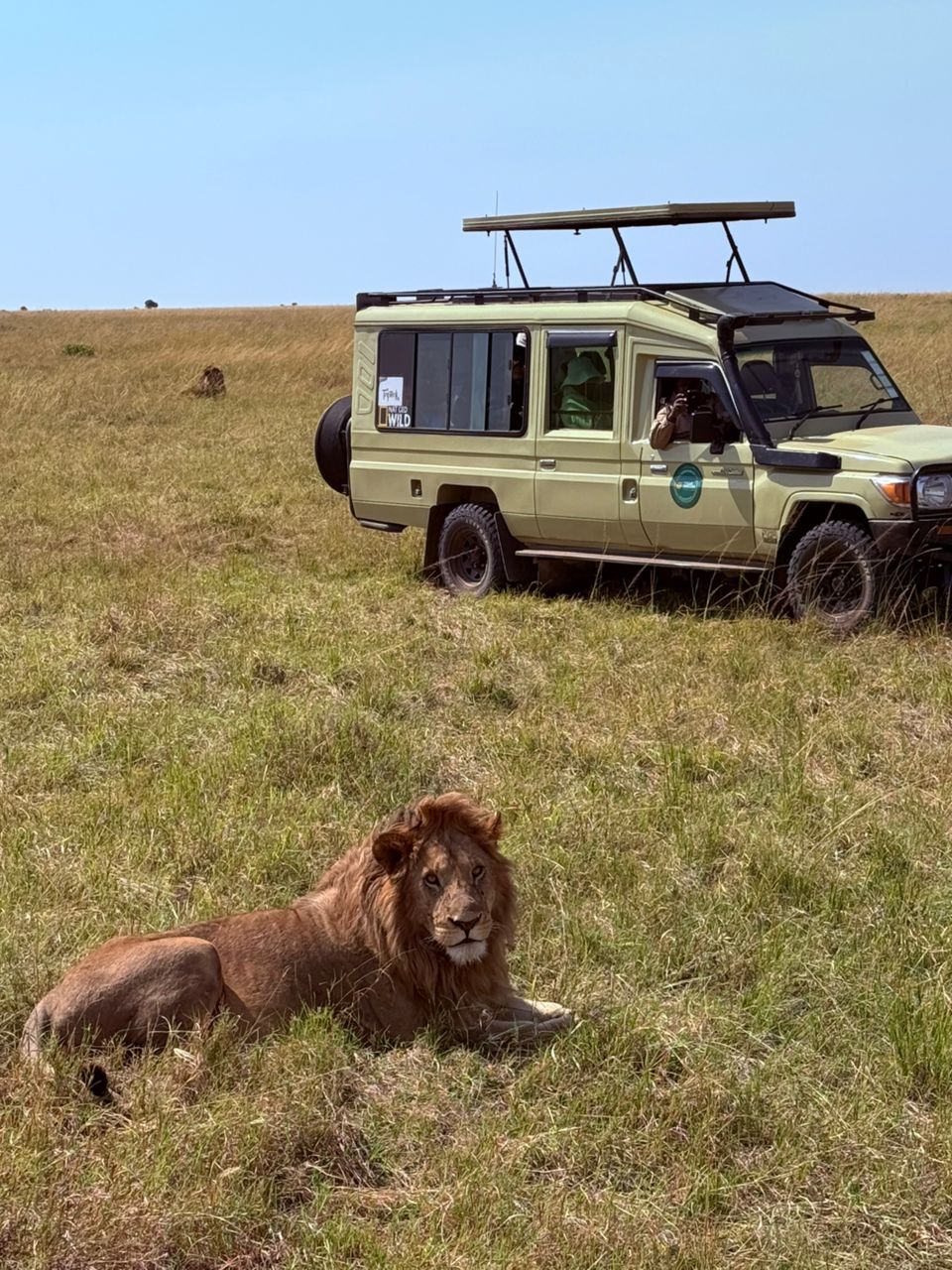
The Great Migration is the headline act, a raw spectacle of survival that unfolds from July to September. During these months, the herds brave the crocodile-infested waters of the Mara River. It’s a breathtaking display, but it’s also the most popular. Because of this high demand, securing a spot often requires booking a full year in advance. Strategic Kenya safari planning means matching your expectations to the sky’s rhythm, especially if you’re chasing the predator-prey action of the calving season in January and February. During this time, the plains of the Mara become a nursery, drawing lions and cheetahs into the open for high-stakes drama.
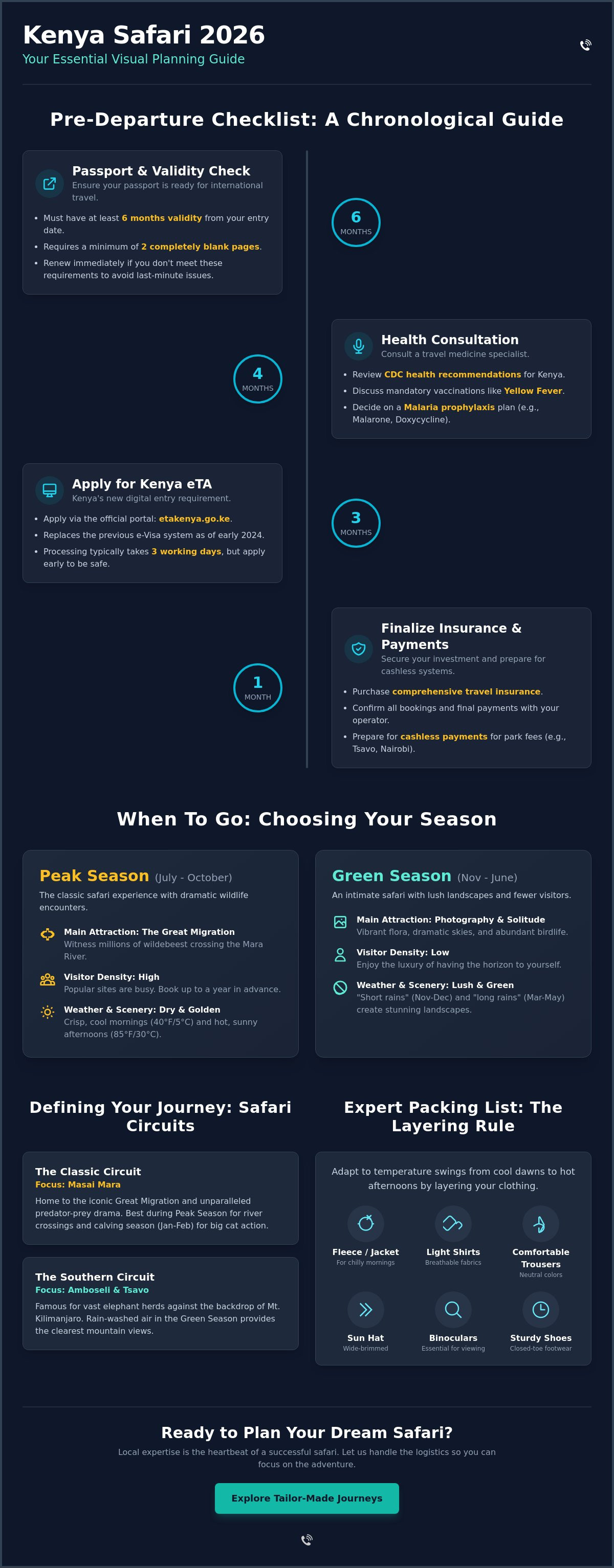
Beyond the dry months lies the ‘Green Season’ from November to May. This period is a hidden gem for photographers and those seeking a more intimate connection with Kenya’s diverse wildlife. The ‘short rains’ in November and December settle the dust, while the ‘long rains’ from late March to May bring lush, dramatic clouds and vibrant flora. While some remote roads can become a challenge for the uninitiated, the sense of solitude and the explosion of birdlife are incomparable rewards for the adventurous soul.
The Peak Season Checklist (July–October)
The air is crisp and the sun is golden. This is the time to prioritize the Masai Mara for those iconic river crossings. You should expect higher visitor densities in the national reserve, so consider staying in private conservancies for a more exclusive experience. Don’t let the afternoon heat fool you; morning game drives can be biting. Always pack for 40°F starts, even if the thermometer hits 85°F by noon.
The Shoulder and Low Season Checklist (November–June)
Adventure doesn’t have a closed season. During these months, the Southern Circuit—encompassing Amboseli and Tsavo—becomes a masterpiece. The rain-washed air provides the clearest views of Mount Kilimanjaro, perfect for that bucket-list photograph. You’ll also find that the Kenya safari cost is often more accessible during this window. Focus on the resident wildlife and enjoy the luxury of having the horizon almost entirely to yourself.
Admin and Health: The Non-Negotiable Pre-Departure Checklist
Logistics are the silent anchors of any great journey. While the heart yearns for the open savannah, the mind must attend to the details that ensure you actually get there. Successful Kenya safari planning requires a steady, rhythmic approach to administration, starting long before you zip your suitcase. Think of this timeline as your personal roadmap to a stress-free arrival.
Six months before your departure, hold your passport in your hands. It needs at least six months of validity remaining from your date of entry and two entirely blank pages. If it doesn’t, renew it now. This avoids the frantic, last-minute rush that can overshadow your excitement. It’s a small step that prevents a world of heartbreak at the boarding gate.
Four months out, it’s time for a health consultation. Review the CDC health recommendations for Kenya and speak with a travel medicine specialist. They’ll guide you through the essentials, such as Yellow Fever requirements and Malaria prophylaxis. Whether you choose Malarone or Doxycycline is a personal medical decision, but starting the conversation early gives your body time to adjust and ensures you have the necessary certificates for entry.
Three months before takeoff, turn your attention to the digital gates. As of early 2024, Kenya transitioned from traditional visas to the Electronic Travel Authorisation (eTA). You must apply through the official portal at etakenya.go.ke. The process is streamlined, typically taking about three working days, but applying early is the hallmark of a seasoned traveler. If the digital paperwork feels like a hurdle, our tailor-made safaris often include the expert guidance you need to navigate these shifting requirements with ease.
Finally, one month out, secure comprehensive travel insurance. Don’t settle for a basic policy; ensure it specifically includes medical evacuation. In the remote reaches of the bush, knowing you have a safety net is the ultimate luxury, allowing you to focus entirely on the horizon.
The Health & Vaccination Checklist
Your health is your most precious cargo. Beyond the standard shots, verify if your specific route enters a Yellow Fever-mandatory zone. Pack a thoughtful ‘Bush Pharmacy’ kit. Include rehydration salts for the heat, antihistamines for unexpected stings, and a broad-spectrum antibiotic recommended by your doctor. It’s about being prepared for the environment so you can enjoy it without distraction.
Travel Documents and Digital Backups
In a digital world, paper is still your best friend. Print physical copies of your eTA, insurance details, and vouchers. Store them in a waterproof folder deep in your carry-on. Simultaneously, upload scans to a secure, offline-accessible cloud folder. For US citizens, registering with the STEP program provides a direct line to embassy alerts, adding one more layer of grounded security to your adventure.
Defining Your Journey: Safari Circuits and Styles
Kenya is a land of infinite textures. From the shimmering heat of the northern deserts to the mist-shrouded peaks of the Aberdares, the geography dictates the wildlife you’ll encounter. Your Kenya safari planning should reflect this diversity, moving beyond a simple checklist to find a circuit that resonates with your personal sense of wonder. Whether you’re drawn to the iconic silhouettes of the Mara or the quiet, ancient rhythms of the north, your choice of route is the heartbeat of your journey. To visualize the vastness of these regions, National Geographic’s Kenya Guide provides a stunning overview of the landscapes you’re about to enter.
The Classic Circuit remains the quintessential introduction to the wild. It balances the high-octane drama of the Masai Mara with the serene, bird-rich waters of Lake Nakuru or Naivasha. For those who dream of seeing the Big Five in a single sweep, this is the gold standard. If you’re seeking a more rugged, elemental connection, look toward the Southern Circuit. Here, the red-dusted elephants of Tsavo and the legendary views of Kilimanjaro in Amboseli offer a sense of scale that’s hard to find elsewhere. Meanwhile, heading north into Samburu for a Wilderness Safari reveals the ‘Special Five’—species like the reticulated giraffe and the long-necked gerenuk that exist nowhere else.
Deciding between tailor-made safaris and group tours is your next vital step. Tailor-made options offer the ultimate luxury: time. You choose when to linger at a sighting and when to move on, ensuring your privacy is never compromised. Group tours can offer a sense of shared discovery, but for many, the intimacy of a private vehicle is what truly transforms a trip into a pilgrimage. Consider your need for solitude versus social interaction as you map out your days. For American travelers weighing their options, exploring Kenya safari packages for US travelers can help clarify the full range of itinerary styles, entry logistics, and pricing structures available for 2026.
Comparing the Circuits
- Classic Safari: Best for first-timers wanting high Big Five density. It’s the iconic experience many imagine when they think of East Africa.
- Southern Circuit: Ideal for those combining a Kenya classic safari with a restorative beach holiday on the sun-drenched coast.
- Wilderness Safari: Best for repeat visitors or those seeking ‘off-the-beaten-path’ solitude in the dramatic northern frontiers.
Accommodation Style Checklist
- Luxury Tented Camps: These offer a seamless blend of authenticity and comfort. Think fine linens and en-suite bathrooms under a canvas roof, allowing the wild to feel just a breath away.
- Safari Lodges: Solid structures that often feel like boutique hotels, featuring pools and expansive dining areas for a more social and grounded atmosphere.
- Bush Camps: For the purist, these rustic setups provide an authentic ‘under canvas’ feel, where the crackle of a campfire and the sounds of the night are your only soundtrack.
The Expert Packing List: What to Bring into the Bush
Packing for the bush is a delicate dance between necessity and weight. It’s about being prepared for the elements without being weighed down by items you’ll never use. In your Kenya safari planning, you’ll soon discover that the most common mistake is over-packing. The wild demands a certain simplicity, focusing on tactile connection and practical comfort rather than an extensive wardrobe.
The most rigid constraint you’ll face is the luggage limit for internal bush flights. These small aircraft typically enforce a strict 15kg (33lb) limit per person, including carry-on. Your bags must be soft-sided to fit into the plane’s specialized pods; hard suitcases are often left behind on the tarmac. This limit encourages a mindful approach to your gear, ensuring you only carry what truly enhances the experience. If you’re struggling to narrow down your essentials, our team can help you design tailor-made safaris that account for these specific logistical needs.
When it comes to photography, dust is your primary adversary. The fine, ancient silt of the plains can find its way into every crevice of your gear. Pack a dedicated dust cover or a simple dry bag for your camera. For wildlife, a lens with at least 300mm reach is essential to capture the intimate details of a lion’s gaze or the texture of an elephant’s skin. Despite what you might see in adventure films, you don’t need heavy hiking boots for most vehicle-based safaris. A pair of comfortable, breathable sneakers or light trail shoes is perfectly sufficient for the drives and camp life.
The ‘Safari Neutral’ Wardrobe
The goal is to blend into the landscape, not stand out. Focus on a palette of khaki, olive, and tan. Avoid dark blue or black fabrics, as tsetse flies are famously attracted to these shades, and steer clear of bright whites that show dust instantly. The ‘Layering Rule’ is your best friend. Morning game drives often start in the biting 40°F chill, but by the time you’re heading back for lunch, the golden heat can reach 85°F. A lightweight, windproof jacket and a high-SPF hat with a chin strap are non-negotiable for those windy drives across the open savannah.
Essential Tech and Gadgets
Power in the bush is often precious. Pack a universal power adapter (Type G) and a multi-port USB charging station to keep your devices ready. For viewing, 8×42 binoculars are the ‘sweet spot,’ offering a wide field of view and enough light intake for those dim, dawn sightings. Don’t forget spare memory cards and a portable external hard drive. You’ll likely take more photos than you anticipate, and a daily backup is the only way to ensure your memories are as enduring as the landscape itself.
Finalizing Your Plans: Booking with Local Expertise
Trust is the invisible thread that binds your entire journey together. As you reach the final stages of your Kenya safari planning, the choice of who stands beside you in the bush becomes your most significant decision. An inbound Destination Management Company (DMC) acts as more than just a booking agent; they’re your boots-on-the-ground lifeline. When a seasonal storm washes out a remote track or a flight schedule shifts unexpectedly, having a local partner with real-time knowledge ensures your adventure continues without a ripple of stress.
Vetting your operator is a matter of safety and integrity. Always confirm that your chosen partner holds a current membership with the Kenya Association of Tour Operators (KATO). This isn’t just a badge; it’s a commitment to a strict code of conduct and financial reliability. Before you sign any agreement, scrutinize your ‘Inclusions’ checklist with a keen eye. Ensure it explicitly covers mandatory park entrance fees, which are now processed through the eCitizen portal, as well as comprehensive meal plans and emergency medical evacuation cover. Clear communication at this stage prevents the frustration of hidden costs later.
Mental preparation is just as vital as your physical gear. Safari is a deeply human experience, built on the expertise of those who live and breathe the savannah. Understanding safari etiquette means recognizing that you’re a guest in a delicate ecosystem. Tipping is a standard way to show appreciation for this stewardship. For a driver-guide, a daily tip of $10 to $15 per guest is a respectful benchmark. For the quiet heroes behind the scenes, such as camp staff and spotters, $5 to $10 per guest, per day, ensures the local community feels the direct benefit of your visit.
Why Local Knowledge Trumps Global Agencies
- Intimate Wildlife Insights: Local guides don’t just follow maps; they understand the specific territories and seasonal movements of the herds.
- Community Impact: Booking directly through a local expert ensures a larger portion of your travel spend supports conservation and community projects.
- Access to the Extraordinary: Local partners often have keys to private conservancies and ‘secret’ sundowner spots that never appear in mass-market brochures.
The Pre-Flight 48-Hour Checklist
The final two days before you depart should be a calm review of your preparations. Confirm all internal flight transfers and pick-up times with your operator. It’s also the time to alert your bank to your international travel dates to prevent any sudden card freezes during a transaction. Perform one last check of your eTA status and health documents. Whether you’ve chosen a rugged Kenya Wilderness Safari or a refined Kenya Southern Circuit, these final steps turn your detailed planning into a reality of pure, unhurried wonder.
Step Into the Wild with Confidence
The dust of the savannah is calling. By now, you have a clear roadmap for your journey, from navigating the digital gates of the eTA to choosing the perfect circuit for your spirit. You understand that the best trips aren’t just about the sightings; they’re about the rhythm of the seasons and the expertise of those who lead the way. Whether you’re chasing the thundering herds of the Mara or the quiet majesty of the Southern Circuit, your preparation is the foundation of your wonder.
Your adventure deserves a personal touch. As a locally owned and operated inbound DMC, we bring decades of bush experience to every mile of the track. We specialize in crafting tailor-made itineraries specifically designed for US travelers, ensuring every detail feels as authentic as the landscape itself. Our expert guides are storytellers who bridge the gap between you and the untamed environment. Start your Kenya safari planning with the local experts at Jungle Dwellers and let us turn your 2026 checklist into a lived reality. The horizon is wide, and the wild is ready to welcome you home.
Frequently Asked Questions
How far in advance should I start Kenya safari planning?
Start your Kenya safari planning at least six to twelve months before your intended departure date. If you’re dreaming of the Great Migration between July and September, booking a year ahead is often necessary to secure the most iconic camps. This timeline gives you the space to manage medical appointments, secure your eTA, and ensure your preferred circuit has availability during the wild’s peak rhythms.
Do I need a visa for Kenya if I am a US citizen in 2026?
Traditional visas are no longer issued; instead, all US citizens must obtain an Electronic Travel Authorisation (eTA) before they fly. You should apply through the official etakenya.go.ke portal at least seven days before your journey. The standard fee is $34.09, and the document is valid for a single entry within 90 days. It’s a digital-only system, so you won’t be able to get a visa on arrival.
What vaccinations are mandatory for a Kenya safari?
A Yellow Fever vaccination certificate is mandatory if you’re traveling from a country with a known risk of transmission. While other vaccinations aren’t legally required for entry, doctors strongly recommend being current on Tetanus, Hepatitis A, and Typhoid. Malaria is a persistent risk in most parks, so beginning a course of prophylaxis is a vital step in your health checklist before you reach the bush.
Can I plan a Kenya safari on a budget, or is it always luxury?
Kenya offers a diverse range of experiences that cater to both budget-conscious travelers and those seeking pure luxury. Strategic Kenya safari planning during the ‘Green Season’ from November to May can reveal more accessible rates at high-quality camps. By choosing mid-range lodges or focusing on the Southern Circuit, you can experience the majesty of the wild without the premium price of the peak migration season.
Is it better to book a private safari or a group tour?
A private safari is the best choice for travelers who value the luxury of time and a personalized schedule. You’ll have a private vehicle and guide, which means you can stay at a sighting for as long as you wish without pressure from others. Group tours offer a social atmosphere and can be more cost-effective, but they don’t provide the same intimacy or flexibility as a tailor-made journey.
What is the luggage limit for internal flights in Kenya?
Internal ‘bush’ flights enforce a strict luggage limit of 15kg (33lb) per person, which must include your carry-on bags. Your gear must be packed in soft-sided duffel bags because hard-shell suitcases won’t fit into the small luggage pods of the aircraft. This requirement ensures the plane remains balanced and safe as it navigates the remote, unpaved landing strips of the savannah.
How much should I tip my safari guide and camp staff?
Tipping is a meaningful way to show appreciation for the local expertise that makes your journey possible. A standard benchmark for a professional guide is $10 to $15 per guest, per day. For the camp staff who look after your comfort behind the scenes, a tip of $5 to $10 per guest, per day, is customary. Most camps provide a communal tip box to ensure the entire team is supported.
Is Kenya safe for families planning a first-time safari?
Kenya is an exceptionally safe and enriching destination for families seeking their first taste of the wild. Many lodges and camps offer family-sized tents and interactive programs that turn the savannah into a living classroom for children. By working with a trusted local partner, you can choose circuits with shorter travel times and family-friendly amenities, ensuring everyone feels safe and supported throughout the adventure.