How Much Does a Kenya Safari Cost? A 2026 Budgeting Guide
Could a simple change in the calendar month double your entry price to the world’s most famous wildlife reserve? Understanding the true Kenya safari cost in 2026 requires more than a glance at a brochure; it demands an insider’s look at recent fee structures and seasonal shifts. You likely feel that planning a trip to the wild should be about the rhythm of the migration, not the stress of opaque pricing or the fear of choosing an unreliable operator. It’s a common concern, especially with the recent transition to the electronic travel authorisation system and updated park regulations.
We promise a clear, honest roadmap that demystifies these expenses, from the fixed $200 peak-season daily fees in the Maasai Mara to the nuances of conservancy stays. You’ll gain the confidence to book a journey that’s safe, authentic, and perfectly aligned with your expectations. This guide breaks down every essential category, including accommodation tiers, transportation logistics, and the specific costs of the new eTA, ensuring your wilderness escape is as seamless as a sunset over the savannah.
Key Takeaways
- Define the 2026 pricing landscape by learning what is included in a standard package, from expert guiding to intimate camp stays.
- Identify the primary drivers of your Kenya safari cost, including seasonal price fluctuations and specific daily park fees for major reserves.
- Differentiate between mid-range, classic, and luxury tiers to find the accommodation style that best resonates with your vision of the wild.
- Prepare for administrative essentials like the new eTA requirements to ensure a smooth and stress-free arrival in Nairobi.
- Uncover the financial and experiential benefits of booking directly with a local destination expert to secure the best value and most authentic insights.
Understanding the 2026 Kenya Safari Pricing Landscape
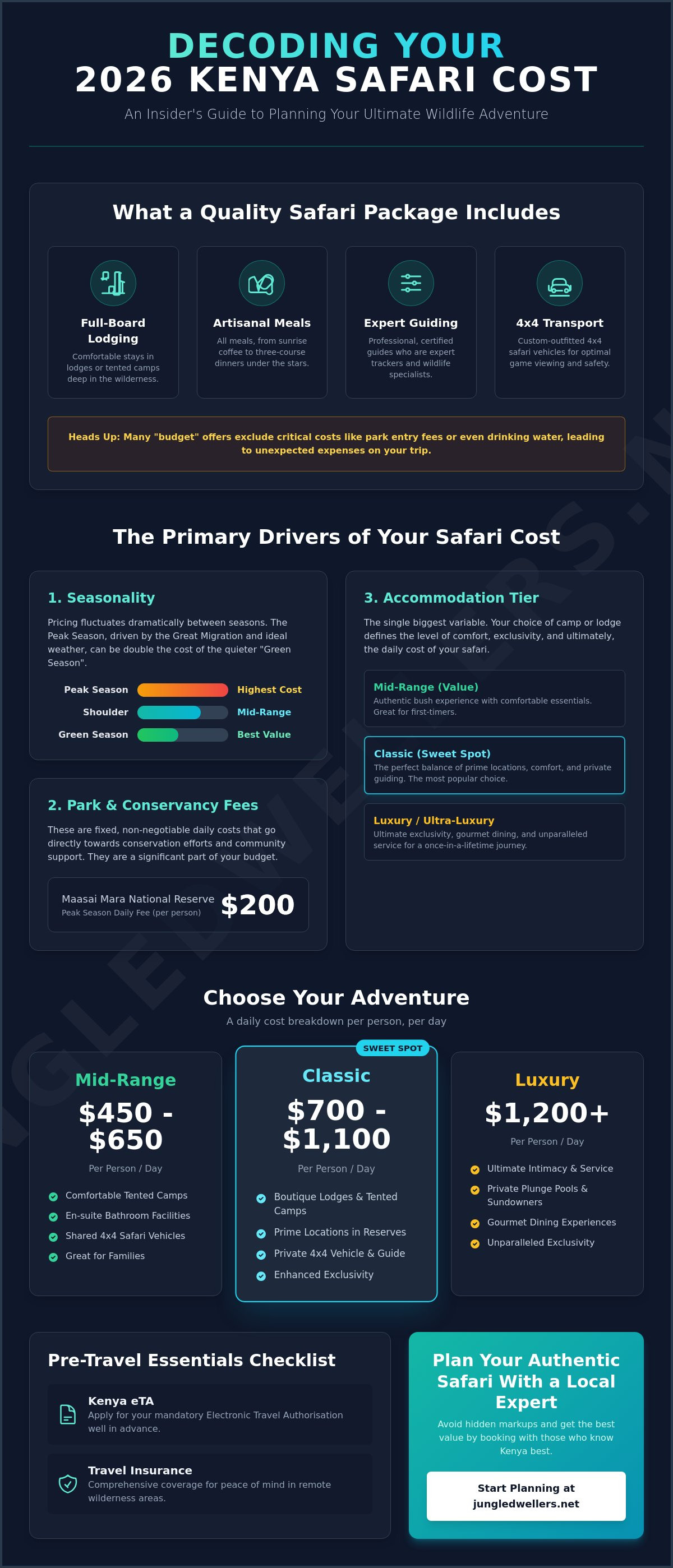
The wild is unpredictable. Your budget shouldn’t be. Calculating a realistic Kenya safari cost for 2026 requires looking beyond the surface level price tags found on generic travel sites. A true safari is a symphony of moving parts, where every dollar contributes to a delicate balance of logistics, hospitality, and conservation. When you book a reputable package, you aren’t just paying for a room; you’re securing a comprehensive experience that includes full-board lodging, artisanal meals, professional guiding, and rugged 4×4 transportation. Many “budget” offers seem attractive at first glance, yet they often hide essential costs like drinking water or park entry fees, leaving travelers with unexpected bills in the middle of the savannah.
The ‘All-Inclusive’ Nature of Safari Planning
Authentic wilderness experiences almost always operate on a full-board model. This isn’t a luxury whim; it’s a logistical necessity. In remote regions like the Maasai Mara or Amboseli, “pay-as-you-go” dining simply doesn’t exist. Your lodge or camp acts as your entire world, providing everything from sunrise coffee to three-course dinners under the stars. Your professional driver-guide is the most vital part of this investment. They are more than just drivers. They are expert trackers, cultural ambassadors, and master navigators who ensure your safety while interpreting the complex behaviors of the wildlife around you. This seamless integration of services is what defines the quality of a Kenyan journey.
Why 2026 Prices Differ from Previous Years
The financial landscape of East African travel has evolved significantly. A glance at the history of Tourism in Kenya reveals a steady shift toward high-value, lower-impact models that prioritize the environment over sheer visitor volume. Global inflation and local conservation levy adjustments have influenced 2026 pricing, but these increases directly support the protection of endangered species and the maintenance of park infrastructure. Because most safari services are priced in US Dollars, currency fluctuations also play a role in what international travelers pay. While the investment has grown, so has the depth of the experience. Modern camps offer better craftsmanship, more personalized service, and a deeper commitment to the local communities who act as stewards of the land. Choosing a transparent provider ensures your funds go where they matter most, rather than being lost to hidden markups or low-quality shortcuts.
Comparing Safari Tiers: From Classic Wilderness to Ultra-Luxury
The beauty of Kenya lies in its diversity, not just in its wildlife, but in how you choose to witness it. Your total Kenya safari cost is fundamentally shaped by the tier of accommodation and the level of exclusivity you desire. While every journey into the bush promises a connection with the wild, the difference between a mid-range camp and an ultra-luxury lodge often comes down to the intimacy of the experience. It’s about how many other vehicles share your lion sighting, the craftsmanship of your tent, and whether your evening ends with a shared buffet or a private sundowner overlooking the plains. Safety and preparedness are also part of the planning process; checking the UK government travel advice provides a helpful baseline for entry requirements and regional guidance, ensuring your investment is backed by sound logistics.
The Mid-Range (Value) Safari: $450-$650 per day
Authenticity doesn’t always require a high price tag. At this level, you can expect comfortable tented camps that feature en-suite bathrooms and warm hospitality. These camps are often located just outside the main reserve gates or in less-crowded sectors. Transport is typically conducted in shared, specialized 4×4 safari vehicles, which is an excellent way to meet fellow adventurers. This tier is ideal for first-time visitors and families who want a genuine bush experience without the added cost of high-thread-count linens or private plunge pools. It focuses on the raw beauty of the landscape and the thrill of the game drive.
The Classic Kenya Safari: $700-$1,100 per day
This is the “sweet spot” for most travelers. A Kenya Classic Safari places you in boutique lodges or permanent tented camps located in prime areas, such as the heart of the Maasai Mara or private conservancies. At this price point, you often enjoy the luxury of a private 4×4 vehicle and a highly experienced guide dedicated solely to your group. This tier allows for a more flexible pace and deeper immersion into the Kenya wilderness safari experience, where the focus is on quality sightings and refined comfort. If you are looking for a journey tailored to your specific interests, a tailor-made safari often begins within this range.
Luxury and Beyond: $1,200+ per day
For those seeking total isolation and bespoke service, the luxury tier offers an unparalleled connection to the land. These are often fly-in safaris, where small planes whisk you directly to private airstrips, bypassing the dusty roads. You’ll stay in world-class camps within private conservancies, granting you exclusive access to activities like night drives and walking safaris that aren’t permitted in the national parks. Fine dining, premium spirits, and expert-led photography drives are standard. The cost reflects the scarcity of the experience; you’re paying for a landscape that feels entirely your own, shaped by hands that understand the finest details of Kenyan hospitality.
The Primary Drivers of Your Safari Investment
Budgeting for the wild is an exercise in balancing the fixed and the flexible. While you can choose between a canvas tent and a stone lodge, several “non-negotiable” factors will anchor your Kenya safari cost. These pillars include government-regulated fees, the timing of your arrival, and the physical logistics of moving between remote landscapes. Understanding these drivers ensures that your budget remains realistic and that you aren’t caught off guard by the mandatory expenses that keep Kenya’s conservation efforts alive. It’s a structured landscape where transparency is the best tool for any traveler.
The 2026 Park Fee Structure
The single most significant fixed expense in any itinerary is the park entry fee. Unlike many international parks, Kenya’s fees are typically calculated on a 24-hour basis for those staying inside the reserves. For 2026, the new conservation fees for Kenya’s national parks have introduced a more tiered approach. In the Maasai Mara National Reserve, non-resident adults pay $100 per day from January to June, but this fee doubles to $200 per day from July to December to manage the high demand during the Great Migration. Premium parks like Amboseli and Lake Nakuru currently sit around $90 per day. All KWS park fees must now be settled in advance via the eCitizen portal; cash is no longer an option at the gate. These funds are vital, directly supporting the rangers and habitat restoration projects that protect the species you’ve come to see.
Timing Your Trip: Peak vs. Low Season
The calendar is perhaps the most powerful variable in your budgeting process. Peak Season, running from July to October, coincides with the thundering herds of the Great Migration. This is when lodge rates are at their highest and availability is scarcest. If you’re looking for value without sacrificing wildlife quality, the Shoulder Season (January to March) offers a brilliant alternative. During these months, the weather is dry, the animals congregate around water sources, and you can often secure a 20% to 30% discount compared to peak rates. For photographers and those seeking solitude, the Green Season (April to June) transforms the savannah into a lush, emerald paradise. While some rain is expected, the lower costs and lack of crowds provide a deeply intimate connection to the land.
Logistics and group dynamics also play a quiet but firm role in the final tally. A private 4×4 Land Cruiser typically costs between $250 and $350 per day to hire. Because this is a flat daily rate, traveling in a group of four or six significantly reduces the per-person cost compared to a couple. You must also weigh the “time vs. money” trade-off of domestic flights. A one-way flight from Nairobi to the Mara can cost between $180 and $400, but it saves a full day of driving on bumpy roads. By analyzing these drivers early, you can shape an itinerary that maximizes every dollar of your investment.
Hidden Costs: Budgeting for the ‘Extras’
A well-planned journey is built on transparency. While your primary Kenya safari cost covers the heart of the experience, several external expenses require separate consideration. These “extras” are the logistical threads that connect your home to the Kenyan bush. International flights, for instance, are always budgeted separately. Because prices fluctuate based on your departure city and booking lead time, these aren’t included in standard land packages. Securing these early is often the best way to protect your overall budget from the volatility of global aviation prices.
Visas, Vaccinations, and Admin
Entering Kenya in 2026 is a digital-first process. The eTA is the mandatory digital entry requirement for all 2026 visitors. This Electronic Travel Authorisation replaced the old visa system in early 2024; it costs approximately $34 to $35 per person. You should apply through the official etakenya.go.ke portal at least three working days before departure. Beyond the paperwork, consider the cost of health preparations. Depending on your home country’s requirements, you may need to budget for yellow fever vaccinations or malaria prophylactics. These medical costs vary by region, so a consultation with a travel clinic is a vital first step in your Kenya safari planning journey.
The Safari Tipping Guide
Gratuity is a meaningful way to honor the craftsmanship of those who make your trip possible. While always optional, tips are a vital part of the local tourism economy, directly supporting the families of the people who share their land with you. For a lead safari guide, a standard guideline is $10 to $25 per guest, per day. For the dedicated camp staff who work behind the scenes, most lodges provide a communal “tip box” in the lounge or reception area. A contribution of $5 to $15 per guest, per night is standard for these shared tips. This ensures that the chefs, housekeepers, and maintenance teams are all recognized for their tireless work.
Finally, never overlook the importance of comprehensive travel insurance. Specifically, ensure your policy includes “evacuation cover.” In the rare event of a medical emergency in a remote area, the cost of a private bush plane evacuation can be significant. Many travelers opt for additional emergency cover for peace of mind while in the wilderness. If you are ready to begin shaping these details into a cohesive plan, our team can help you design tailor-made safaris that account for every logistical nuance from arrival to departure.
Maximising Value: Why Booking with a Local Inbound DMC Matters
Value is more than a line item on a spreadsheet. It’s the depth of the connection you feel to the land and the peace of mind that comes from expert support. To truly optimize your Kenya safari cost, you must look at how your investment is distributed. Booking with a local inbound Destination Management Company (DMC) ensures that your funds go directly into the craftsmanship of your journey, rather than being diluted by international middleman markups. Large global agencies often add layers of commission that provide no additional value to your actual time in the bush. By working directly with Jungledwellers.com, you gain access to local resident rates and long-standing partnerships with lodges that international platforms simply cannot match. This direct connection ensures that more of your money supports local conservation and the communities that protect these wild spaces.
Tailor-Made vs. Group Joining
A custom itinerary is often viewed as a luxury, yet it’s frequently the most cost-effective way to travel. With tailor-made safaris, you have the flexibility to focus your budget on what matters most to you, perhaps choosing a more modest camp to afford a private vehicle or a longer stay in a specific region. For solo travelers, group joining options can reduce the Kenya safari cost by sharing transportation expenses, though it requires more rigidity in the schedule. If you’re seeking exceptional value in 2026, we often recommend exploring the Kenya Southern Circuit. This route, encompassing the red-dusted plains of Tsavo and the iconic views of Amboseli, offers a different rhythm and often more competitive pricing than the high-demand northern parks. It’s a way to experience the raw beauty of the Kenyan wilderness while making your budget work harder. For a comprehensive overview of everything you need to prepare before departure, our ultimate 2026 Kenya safari planning checklist walks you through every step from booking to boarding.
The Jungledwellers.com Advantage
We are more than just a travel provider; we are a locally owned and operated DMC with deep roots in the soil of this country. This insider status allows us to hand-pick guides who aren’t just employees, but passionate storytellers and stewards of the environment. Our presence on the ground means we provide real-time support and safety, adapting to changing conditions instantly to ensure your journey remains seamless. We believe that a safari should be carefully shaped by human hands, reflecting the authentic spirit of Kenya. Whether you are interested in a Kenya Classic Safari or a more rugged Kenya Wilderness Safari, our expertise ensures every detail is managed with care. Ready to plan? Request a bespoke 2026 Kenya safari quote from our local experts.
Step Into the Heart of the Wild
Planning your escape to the savannah is about more than just numbers; it’s about the quality of the moments you’ll carry home. You now understand that your Kenya safari cost is a reflection of intentional choices, from the seasonal rhythm of the migration to the logistical precision of moving between camps. By identifying the fixed park fees and choosing the tier that resonates with your spirit, you’ve already cleared the path for a seamless adventure. The confusion of opaque pricing is replaced by the clarity of a well-structured plan.
As a locally owned and operated inbound DMC, we take pride in being your bridge to this untamed environment. Our expert guides bring over 10 years of bush experience to every game drive, ensuring your journey is as safe as it is inspiring. We believe in the power of a journey shaped by human hands, offering tailor-made itineraries that start from $450 per day to suit your specific vision. Start planning your dream adventure with a custom Kenya safari quote. The plains are calling, and the horizon is wide. We look forward to welcoming you home to Kenya.
Frequently Asked Questions
Is a Kenya safari worth the cost in 2026?
Yes, the investment is profound because it grants you front-row access to one of the world’s last great wildernesses. Your Kenya safari cost directly supports vital conservation initiatives and local communities who act as guardians of the land. In 2026, the refined infrastructure and high-quality guiding ensure that every moment in the bush feels intimate, safe, and deeply meaningful. It isn’t just a holiday; it’s a contribution to the survival of the species you’ve traveled across the globe to see.
How much should I tip my safari guide in Kenya?
A standard guideline for a lead safari guide is $10 to $25 per guest, per day. This recognizes their deep expertise in tracking and their commitment to your safety. For the broader lodge team, most camps provide a communal tip box where a contribution of $5 to $15 per guest, per night is customary. These gratuities are a vital part of the local economy and are always deeply appreciated by the people who work tirelessly to craft your experience.
Are flights included in the Kenya safari package price?
International flights are always budgeted separately and are not included in our land-based packages. This allows you the flexibility to choose your preferred airline and departure city. While some of our fly-in itineraries include domestic light-aircraft transfers between parks, we always provide a clear breakdown so you know exactly what is covered. It’s best to book your international travel early to secure the most competitive rates before your arrival in Nairobi.
What is the cheapest month to go on a safari in Kenya?
The “Green Season” months of April, May, and June typically offer the lowest rates of the year. During this period, many lodges provide significant discounts as the landscape transforms into a lush, emerald paradise. While you should expect some rain, the lack of crowds and the presence of newborn animals make it a favorite time for photographers. It’s the ideal window for travelers seeking an authentic experience with a more accessible budget.
Can I save money by booking a self-drive safari?
We don’t offer or recommend self-drive rentals because navigating the Kenyan bush requires specialized local knowledge and rugged, well-maintained vehicles. Attempting to drive yourself often leads to missed wildlife sightings and logistical stress that can detract from your journey. A professional guide brings a trained eye and deep ecological insight that you simply can’t replicate on your own. Investing in a guided experience ensures your safety and maximizes the quality of every game drive.
How much cash should I bring on a Kenya safari?
We recommend budgeting approximately $30 to $50 per person, per day in cash for tips and personal extras. While most lodges accept major credit cards for gift shop purchases or premium drinks, smaller denominations of US Dollars or Kenyan Shillings are essential for gratuities. Ensure any US currency you bring is printed after 2013, as older notes are often difficult to exchange or use locally. This buffer ensures you can move through your journey with ease and confidence.
Do Kenya safari prices include park entrance fees?
Reputable safari packages almost always include these fees to ensure a seamless experience at the reserve gates. However, it’s vital to confirm this with your provider, as some budget operators leave these as “hidden” costs for you to settle via the eCitizen portal. We include all mandatory conservation and park fees in our quotes so there are no surprises. This transparency allows you to focus entirely on the landscape rather than the administrative logistics of the park system.
Is it cheaper to go on safari in Kenya or Tanzania in 2026?
Kenya often provides a more diverse range of price points and more competitive options for the overall Kenya safari cost. While both countries have seen increases in government conservation fees, Kenya’s established tourism infrastructure and high volume of flights often make it more accessible for international travelers. Tanzania remains a stunning destination, but the logistics of the Northern Circuit can sometimes command a higher premium. Kenya’s variety of circuits allows us to shape a journey that meets your financial goals without sacrificing the wonder of the wild.